I have always been drawn to life beneath the water’s surface. Not only because of its movement, but because of the quiet complexity of the creatures that live there. This project grew out of curiosity. A wish to get closer, to slow down, and to really see what is usually overlooked.
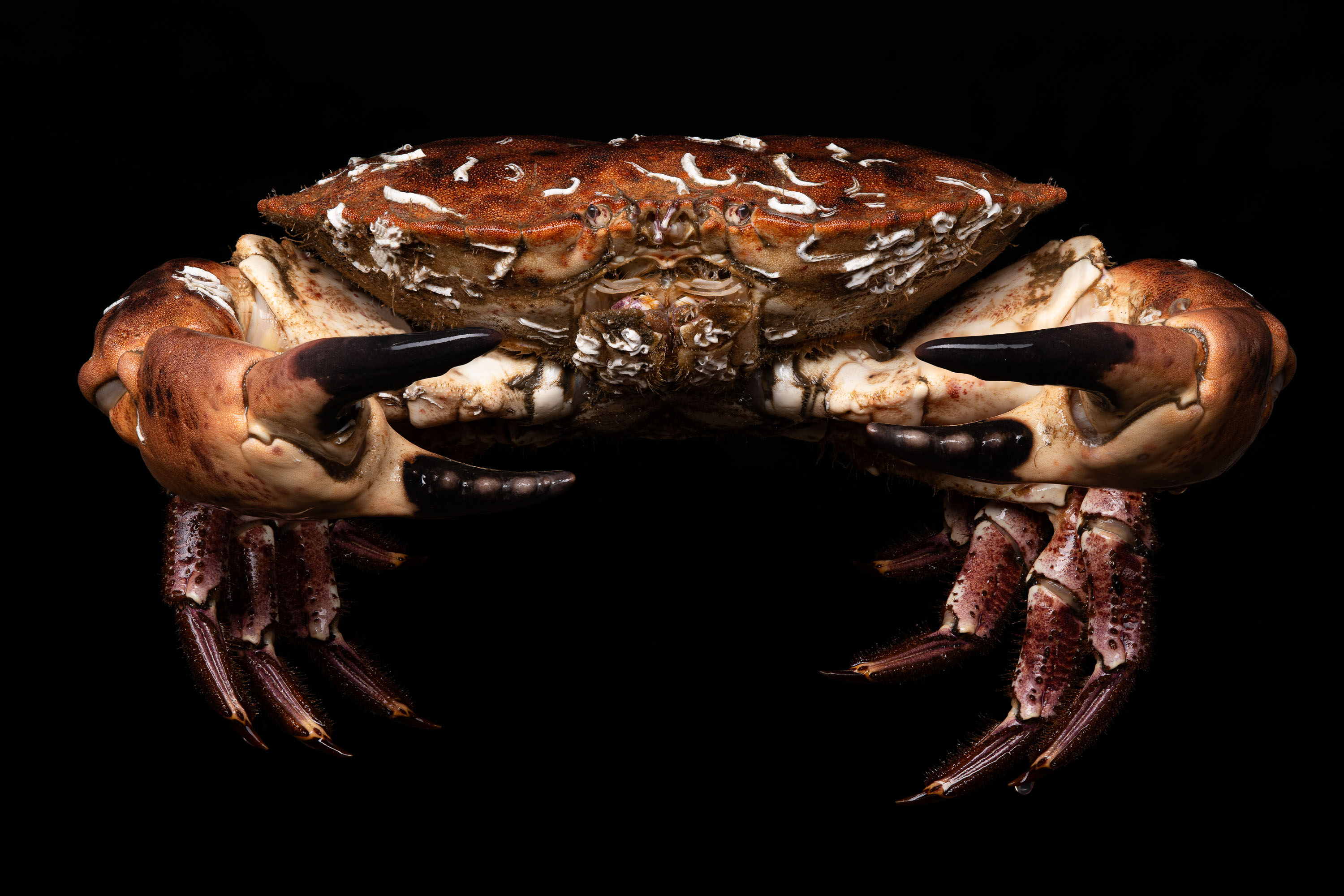
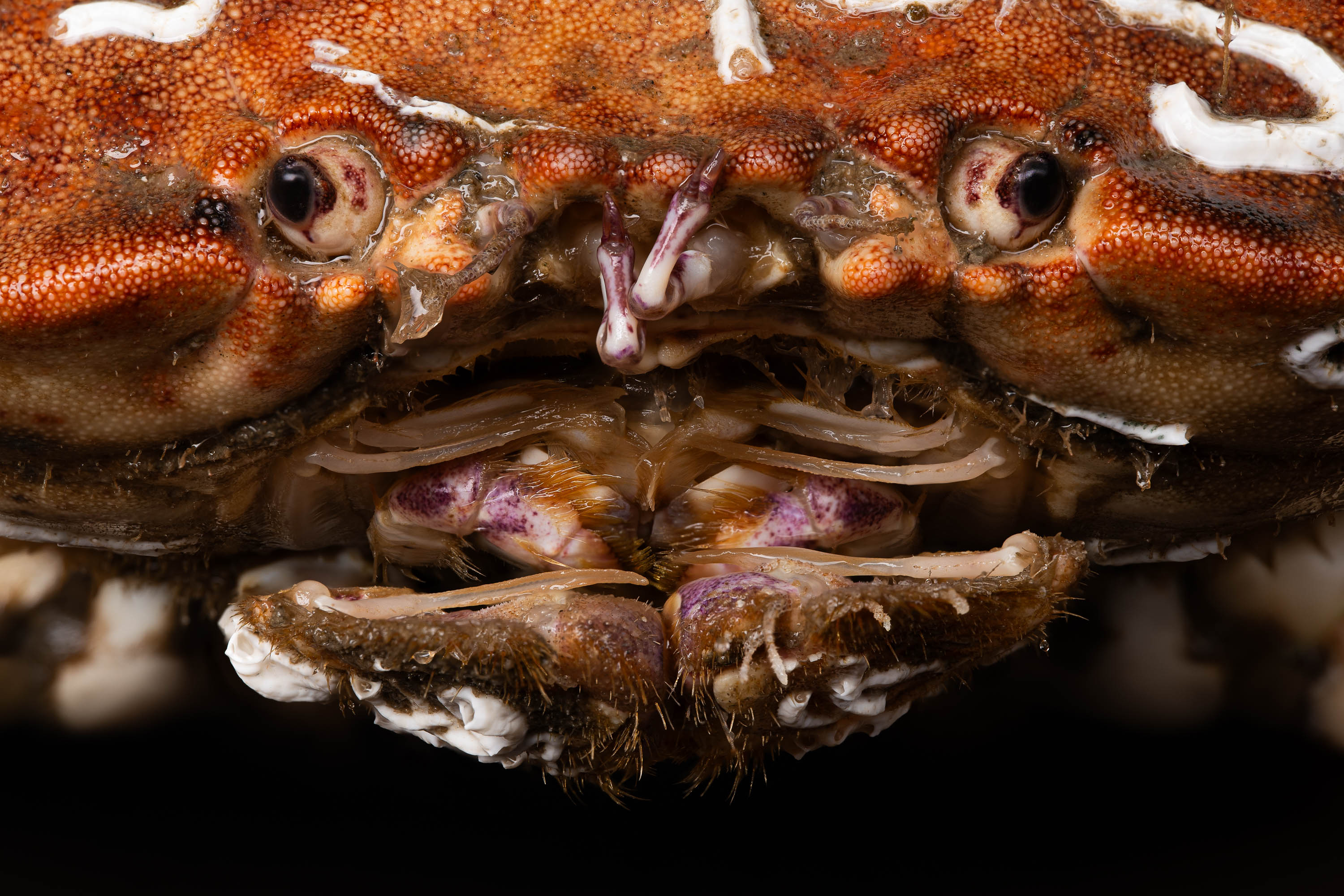
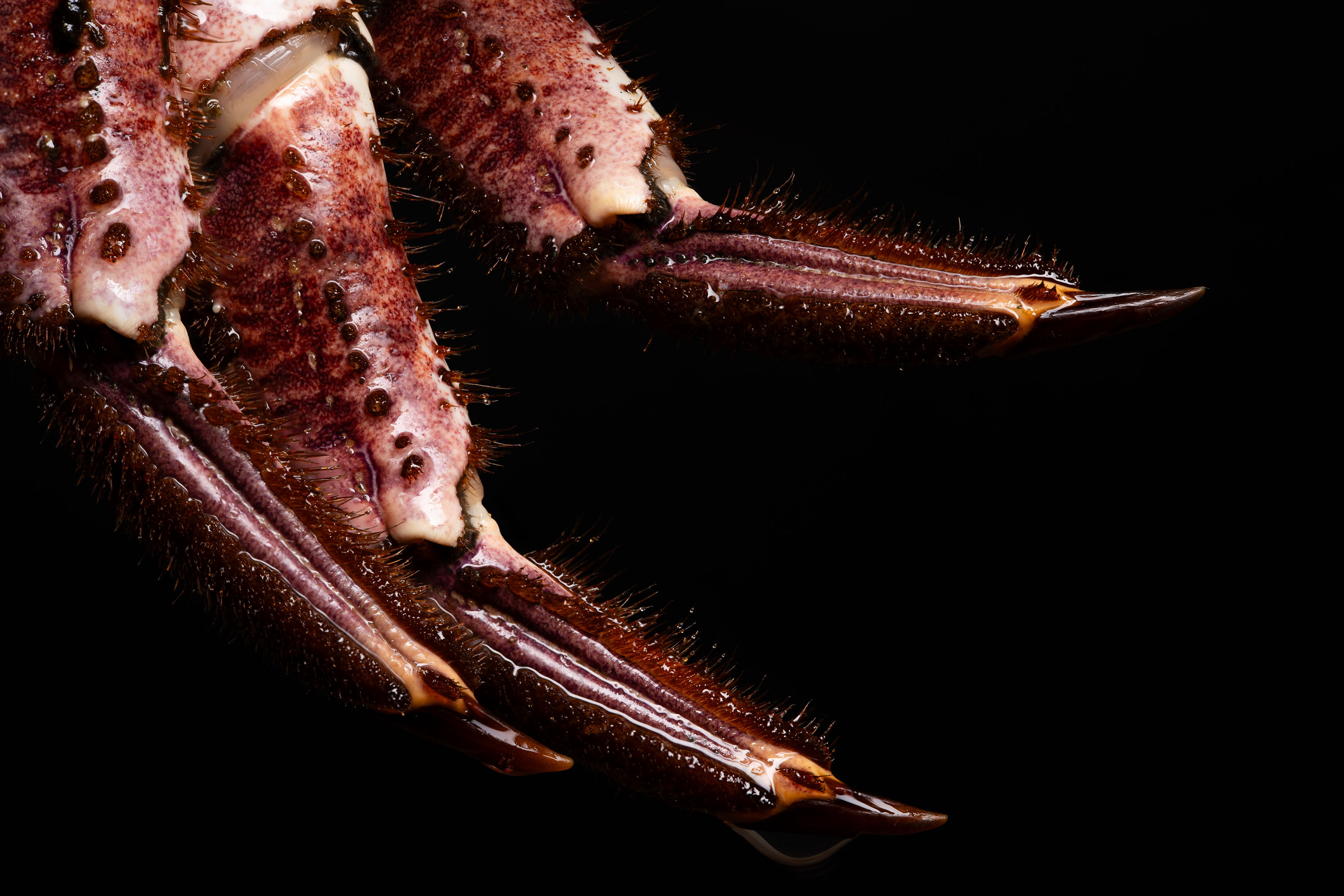
Using focus stacking, I photographed fish, shells, and shellfish as small worlds of their own. Each animal is presented as a triptych, three images that together form a single portrait. This approach creates space to look more carefully, revealing texture, structure, and character in an intimate way.
By looking this closely, a different way of seeing begins to emerge. Details start to feel like landscapes. Surfaces tell stories about survival, adaptation, and time. Every ridge, curve, and structure has a purpose, shaped by evolution and environment rather than decoration. What might seem delicate or decorative at first glance turns out to be functional, the quiet result of many small changes. Through this process, these animals no longer feel distant or anonymous, but present. Seen. Almost encountered.
North Sea Crab
The North Sea crab lives close to the seabed, moving sideways between rocks and sand. Its shell is thick, its claws strong. When something comes too close, it doesn’t flee, it stands its ground. Sideways movement might look awkward, but it’s how this crab has always done things.
Oyster
An oyster filters seawater to feed. Water flows in, food is taken out, the rest flows back. While staying in one place, it slowly builds its shell, layer by layer, over time. Some oysters never move at all after settling.
Red Gurnard
Bright in colour and hard to miss. The red gurnard doesn’t only swim, it also moves along the seabed using its fins to search the sand. Those fins act almost like fingers, feeling their way forward.
Weever Fish
The weever fish hides just beneath the sand, often with only its eyes visible. It stays still and waits. Stepping on one is a common way people notice it for the first time.
Mackerel
Always moving, rarely alone. Mackerel travel through open water in fast-moving schools. Their bodies are built for speed, and stopping is rarely part of the plan.
.jpg)
.jpg)
.jpg)
.jpg)
.jpg)
.jpg)
.jpg)
.jpg)
.jpg)
.jpg)
.jpg)
.jpg)